

For many individuals, overly large breasts can be more than a cosmetic concern, they can cause persistent physical pain, restrict movement, and negatively impact emotional well-being. Breast reduction surgery, also known as reduction mammaplasty, is a life-changing procedure that removes excess breast tissue, fat, and skin to create a more proportional, comfortable figure.
While aesthetic improvements are often welcome, the true value of breast reduction lies in its ability to relieve chronic discomfort, improve mobility, and restore confidence in everyday life. Patients frequently report newfound freedom physically, emotionally, and socially after surgery.
At The Nathan Clinic in Miami, board-certified plastic surgeon Dr. Nirmal Nathan has helped countless patients regain comfort and confidence through breast reduction. Known for his patient-first philosophy, surgical expertise, and commitment to natural-looking results, Dr. Nathan offers a transparent and compassionate approach that prioritizes safety and long-term satisfaction.
What Is Breast Reduction Surgery?
Breast reduction surgery, also known as reduction mammoplasty, is a surgical procedure designed to reduce the size and weight of the breasts. This relieves physical discomfort, improves body proportion, and also can address certain cosmetic concerns a patient might have.
The primary goal of breast reduction surgery is to remove excess breast fat, glandular tissue, and skin to achieve a breast size more proportionate to the patient’s body. This can alleviate discomfort caused by overly large breasts, such as back and neck pain, skin irritation, and posture problems. For others, it may serve aesthetic purposes—improving body confidence and breast symmetry.
What is Involved
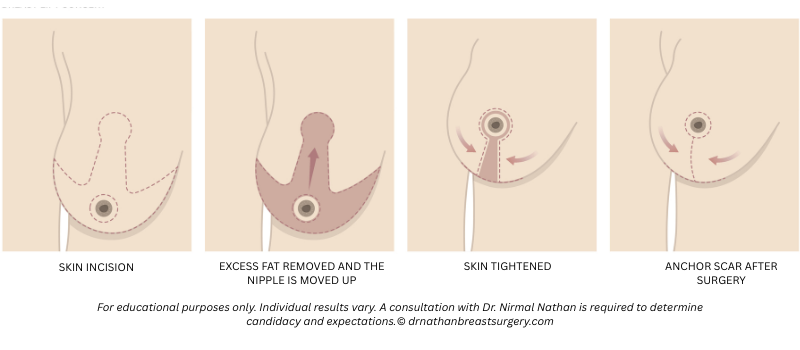
Breast reduction surgery involves several different procedures depending on the circumstances and what the end goal is for the patient. Regardless of which procedure is done, reduction surgery involves the physician making incisions to remove tissue and reshape the breasts.
The first and most common approach for this is the anchor or inverted-T incision. This is considered to be a traditional method, and is used for more significant breast reductions. For moderate reductions, a vertical or lollipop incision is used as it is less intensive and leads to less scarring. For patients requiring only minimal reduction without skin removal, the liposuction-only reduction is the most popular choice as it is the least invasive.
Once the tissue is removed, the breasts are reshaped and the nipples are repositioned in order to achieve a natural look. Whenever possible, the nipples are repositioned to be able to maintain sensitivity for the patient.
Cosmetic vs. Medically Necessary Reductions
There are a few different reasons for considering breast reduction surgery. Generally speaking, these fall into two categories – cosmetic and medical. A large portion of reductions are completed for medical reasons, particularly when there are issues with chronic pain caused by excessive breast weight. Additionally, skin issues, breathing difficulty and other health problems caused by excessive tissue are common reasons for breast reduction surgery. Because these are considered medically necessary, they are usually covered by insurance with proper documentation from the patient’s healthcare provider justifying the procedure.
While most patients choose reductions for medical reasons, there are others who do it solely for cosmetic purposes. The goal of cosmetic breast reductions is to enhance the looks of the patients breasts, mostly in the enhancement of proportions and improving symmetry. Generally speaking, cosmetic reductions are not covered by insurance because they are not medically necessary. Many patients experience a boost in self confidence and mental well being after a breast reduction, regardless of whether it is for medical or cosmetic reasons.
Why Patients Choose Breast Reduction
There are several reasons for patients to choose breast reduction surgery. While typically categorized as cosmetic surgery, overly large breasts can place significant physical and psychological burden on individuals. Removing excess breast tissue, fat and skin can provide relief to individuals and help them restore their quality of life.
Common Physical Issues
Many patients seek breast reduction to alleviate chronic physical discomfort that interferes with daily functioning. One of the most commonly cited concerns is persistent back pain, as well as pain in the neck and shoulders. The weight of disproportionately large breasts can place constant strain on the spine and surrounding musculature. Over time, this pressure can result in musculoskeletal problems, reduced mobility, and long-term postural issues.
Another common physical issue prompting individuals to seek breast reduction is skin irritation. Excessive breast tissue can lead to persistent rashes or infections beneath the breast fold due to trapped moisture and friction. This condition is known as intertrigo and can significantly impair physical comfort, often requiring ongoing treatment. In many cases, topical remedies provide only temporary relief, making surgical intervention a more permanent solution.
In addition to skin irritation from excessive breast tissue, it can also cause discomfort with bras. Regardless of the size of the bra, the weight from large breasts can cause bra straps to leave deep groves in the skin. Long term, this can result in bruising and nerve compression in the shoulders. For some patients, these indentations serve as a daily reminder of their physical limitations and the need to constantly accommodate an unsupported frame.
Numbness, tingling, or shooting nerve pain in the breasts, arms, or hands can also occur due to compression of nerves and improper posture. These neurological symptoms are not only uncomfortable but can also signal more significant structural issues within the body’s musculoskeletal or nervous system, prompting the need for surgical correction.
Emotional and Lifestyle Impacts
In addition to the physical challenges, emotional and psychological factors often play a key role in a patient’s decision to undergo breast reduction. One of the most cited issues is difficulty participating in physical activities. For individuals with overly large breasts, exercise can become painful or nearly impossible.
Running, aerobics, and other high-impact activities may cause significant discomfort or embarrassment, discouraging individuals from leading an active lifestyle. This can further contribute to weight gain, reduced cardiovascular health, and feelings of social isolation.
Another concern is the effect that overly large breasts have on wardrobe options. Many individuals with excessive breast tissue find it difficult to find properly fitting clothing, especially bras, swimwear, and fitted tops. Garments that should provide comfort and self-expression instead become a source of frustration or embarrassment. Some patients report shopping anxiety and frequent wardrobe malfunctions that interfere with their professional and personal lives.
Psychologically, the burden of disproportionately large breasts often leads to body image issues and reduced self-esteem. Many patients feel self-conscious or overly sexualized, particularly in social or professional environments. This emotional toll can begin in adolescence and persist well into adulthood, affecting social relationships and mental well-being. Constant unwanted attention or inappropriate comments can exacerbate feelings of shame or insecurity.
For many individuals, breast reduction becomes a way to reclaim personal confidence and comfort. Patients often describe the procedure as life-changing—not because of aesthetic transformation alone, but because of the physical and emotional relief it provides. The freedom to move, dress, and interact without discomfort allows many to feel more in control of their bodies and lives.
Risks of Breast Reduction Surgery
Surgical and Anesthetic Complications
As with any surgical procedure, breast reduction carries inherent risks related to both surgery and anesthesia. Common complications include infection, excessive bleeding, and the formation of hematomas—localized collections of blood outside the blood vessels. Patients may also experience adverse reactions to anesthesia, ranging from mild nausea to more severe respiratory or cardiovascular events.
These risks are not uniform across all patients and can be influenced by individual health factors such as obesity, smoking status, and underlying medical conditions. In addition, the surgeon’s technique and the standards of the surgical facility play a critical role in minimizing these complications.
While serious outcomes are uncommon, they can occur and may require hospitalization, additional procedures, or extended recovery periods to manage. This is one of the reasons why it’s so important to choose the right breast surgeon with experience and a track record of successful surgical procedures.
Scarring and Skin Irregularities
Scarring is an inevitable component of the healing process following breast reduction surgery. However, the extent, texture, and appearance of scars can vary significantly based on a patient’s skin type, genetic predisposition, and how their body responds to wound healing. Typical incision patterns used in breast reduction procedures will leave visible scars that may fade over time but typically do not disappear entirely.
In some cases, patients may develop hypertrophic or keloid scars, which are raised, thickened, and may extend beyond the original incision lines, leading to dissatisfaction with the cosmetic result. Another potential complication is skin necrosis, particularly around the incision lines or the nipple-areolar complex, where compromised blood flow can lead to tissue loss requiring further treatment.
Nipple Sensation and Breastfeeding Challenges
Changes in nipple sensation are a known risk following breast reduction surgery. Patients may experience numbness, tingling, or hypersensitivity in one or both nipples, which may resolve over time but can also become permanent. The degree of sensation loss often depends on the extent of tissue removal and whether the nipple-areolar complex was detached and repositioned during the procedure.
This surgical manipulation can also interfere with the milk ducts and glandular tissue necessary for breastfeeding. While some women are still able to breastfeed post-surgery, others may face challenges or lose the ability altogether. These risks should be carefully considered, especially by younger patients who anticipate having children in the future.
Asymmetry and Aesthetic Concerns
Achieving perfect symmetry is a surgical goal but not always a realistic outcome in breast reduction procedures. Natural variations in breast shape, skin elasticity, and healing patterns can lead to subtle or noticeable asymmetry in size, contour, or nipple placement.
Despite best efforts to create balance, the results may not meet every patient’s aesthetic expectations. Some may feel that their breasts appear too large or too small after the procedure or are simply dissatisfied with the overall shape. It’s important for patients to have a clear understanding of the limitations of this procedure and maintain realistic expectations about the final result prior to undergoing breast reduction surgery.
Delayed Healing and Revisions
In some cases, healing may take longer than expected, particularly around the incision sites where tension or friction may slow the recovery process. Certain health conditions such as diabetes, vascular disease, or habits like smoking can further impair the body’s ability to heal, increasing the risk of wound dehiscence.
When complications with healing occur, additional treatments or longer periods of wound care may be necessary. Some patients may opt for revision surgery to address issues such as scarring, asymmetry, or dissatisfaction with the initial cosmetic outcome. These secondary procedures involve added recovery time, potential complications, and increased financial costs, underscoring the importance of thorough consultation and preparation before the initial surgery.